Your Competitors Are Stealing Your Customers Right Now—And Google’s Letting Them
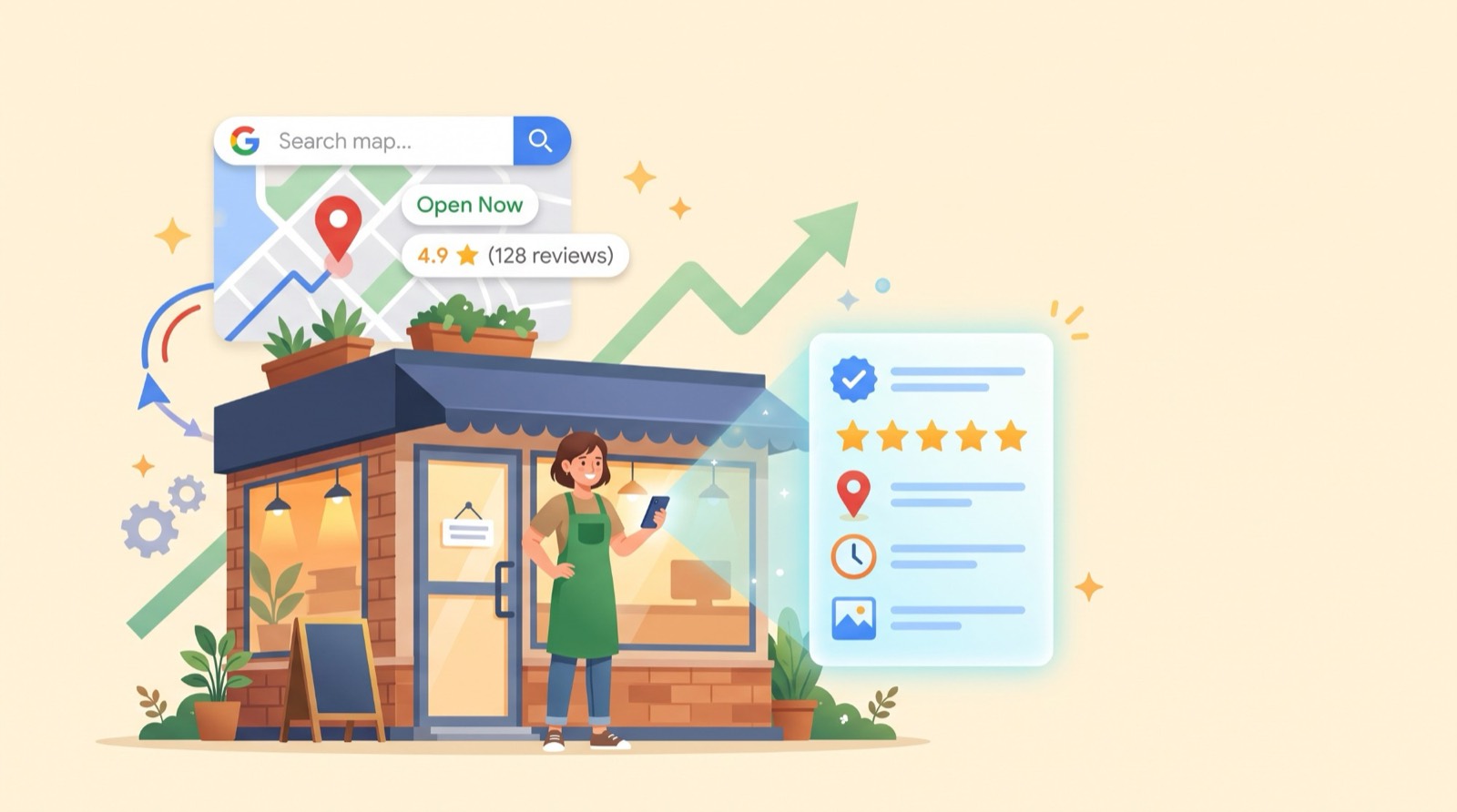
If you’ve followed my work for any length of time, you know I’m ruthless about ROI. I tell business owners to cut what doesn’t work and double down on what does. So when I say that claiming and verifying your Google Business Profile (GBP) is the highest-return, lowest-cost action you can take for local visibility, I want you to understand this isn’t motivational fluff. It’s math, mechanics, and decades of watching local businesses win (and lose) the exact same battle.
This article will walk you through why your Google Business Profile matters more than almost any other marketing channel, what actually happens when you leave it unclaimed, the step-by-step process to claim and verify it, and the optimization mistakes I see even savvy business owners make. Let’s get to work.
What Is a Google Business Profile, Really?
A Google Business Profile is the information panel that appears when someone searches your business name on Google, or when they search for what you do, like “plumber near me,” “best coffee shop in Austin,” or “emergency dentist open now.” It includes your hours, phone number, website, photos, reviews, Q&A, and directions. It powers your presence in Google Maps and the Local Pack: the map plus three business listings that appear at the very top of local search results, above organic results and almost always above the fold on mobile.
Here’s the key insight most owners miss: your GBP isn’t optional real estate. In many cases, Google creates a profile for you automatically, scraping data from across the web. The question isn’t whether you have a profile. The question is whether you control it.
The High Cost of an Unclaimed Profile
When I audit a local business’s digital presence, unclaimed profiles are one of the most common, and most damaging, findings. Here’s why.
Wrong information, published under your name. An unclaimed profile might list your old phone number, your pre-pandemic hours, or a service you discontinued two years ago. Every confused customer who shows up to a locked door or calls a dead number is a customer you’ve lost, not to a competitor’s superior offer, but to a data error you never corrected.
A glaring vulnerability: “Own this business?” On unclaimed listings, Google displays a link inviting anyone to claim the profile as theirs. That means a competitor, a disgruntled ex-employee, or a spammer could potentially take control of your public-facing information. I’ve seen businesses spend weeks in Google’s support queues trying to reclaim profiles that someone else verified first. This alone is reason enough to claim yours today, not this quarter.
You’re invisible where it matters. The Local Pack captures a disproportionate share of clicks for local searches. Verified, complete, active profiles are strongly favored there. If you’re unverified or your profile is a skeleton, you’re handing that position to competitors who did the work.
You can’t manage your reputation. Without claiming your profile, you can’t respond to reviews, flag fake ones, answer customer questions, or post updates. Your reputation is being written in public, and you don’t even have a pen.
The ROI Math
Let me put this in financial terms, because that’s the language I speak with clients.
Roughly 46% of all Google searches have local intent. A large majority of consumers search for local business information before making a purchase decision, and on mobile especially, many searchers never scroll past the Local Pack. Your GBP is your storefront in that moment of decision: the reviews, photos, hours, and responses that convince someone to choose you or scroll past you.
Now compare the cost. Paid search and social ads are rented visibility. The moment your budget stops, your presence vanishes. A well-maintained GBP is an asset that compounds. Every review builds social proof. Every photo and post signals an active business. Every answered question removes a barrier to purchase. Month after month, the profile gets stronger, at zero ongoing cost.
In my experience optimizing local businesses, I have never seen a marketing activity with a better effort-to-outcome ratio. An hour of setup, plus thirty minutes a month of maintenance, routinely outperforms hundreds of dollars in monthly ad spend. That’s not hyperbole; it’s the pattern I see across industries.
How to Claim and Verify Your Profile: Step by Step
Ready to do this? Here’s the exact process.
Step 1: Search for your business. Go to Google Maps or business.google.com and search your business name. If a listing exists, you’ll see it, and if it’s unclaimed, you’ll see an option like “Own this business?” or “Claim this business.” If no listing exists, you can create one from scratch.
Step 2: Sign in with a Google account you control. Use a business email, not a personal Gmail you might lose access to.
Step 3: Verify ownership. Google offers several verification methods: postcard by mail (the most common for new claims; it arrives in about 5 to 14 days with a code), phone or email (offered to some established businesses), video verification (record proof of your location and operations), and instant verification (available if your website is already verified in Google Search Console). Complete whichever method Google offers; the postcard is the default for most.
Step 4: Complete every field. This is where most businesses leave value on the table. Fill out your primary and secondary categories, services, attributes (like “wheelchair accessible” or “accepts credit cards”), business description, and hours (including holiday hours), and upload high-quality photos of your location, team, and work. Google rewards completeness with better visibility, and customers reward it with more calls and visits.
Step 5: Activate the profile. Publish your first post, answer any existing questions, and set up notifications so you know when new reviews or questions arrive.
The Mistakes I See Most Often
Even businesses that claim their profile undermine it with sloppy execution. Watch for these:
- Inconsistent NAP data. Your name, address, and phone number must match your website and other directories exactly. Variations (“St.” vs. “Street”) dilute Google’s confidence in your listing.
- Keyword stuffing the business name. Listing yourself as “Joe’s Plumbing | Best Emergency Plumber Denver 24/7” is a policy violation that can get your profile suspended. Use your real-world business name.
- Ignoring reviews. Responding to reviews, both positive and negative, boosts engagement signals and shows customers you care. Silence reads as indifference.
- Setting and forgetting. Profiles that go stale (no new photos, no posts, unanswered questions) underperform. Aim for a light monthly maintenance routine.
- Wrong categories. Your primary category is one of the strongest ranking factors for relevant searches. Choose carefully and review your competitors’ choices.
Your Next Step
Here’s my challenge to you: don’t let this be another article you bookmark “for later.” Open a new tab right now, Google your business name, and check whether that “Own this business?” link is sitting there waiting for you, or worse, already claimed by someone else. Claiming and verifying your Google Business Profile takes less time than reading this article did, and the local visibility payoff compounds for years.
Your competitors are either already doing this or about to read the same advice. In local search, there’s no prize for second place. Claim your profile today. And if you want to go further, start systematically collecting reviews this week. That combination is the foundation of local search dominance, and it’s sitting there, free, with your name on it.